DEaLkite
The DEaLkite is the metaphor and foundation of the DEaLflow method and helps professionals and teams understand and consciously steer their professional direction of movement. This dynamic model makes visible how motivation and development are continuously in motion, and offers handles to effectively direct personal and team development.

The two axes: motivation axis and development axis
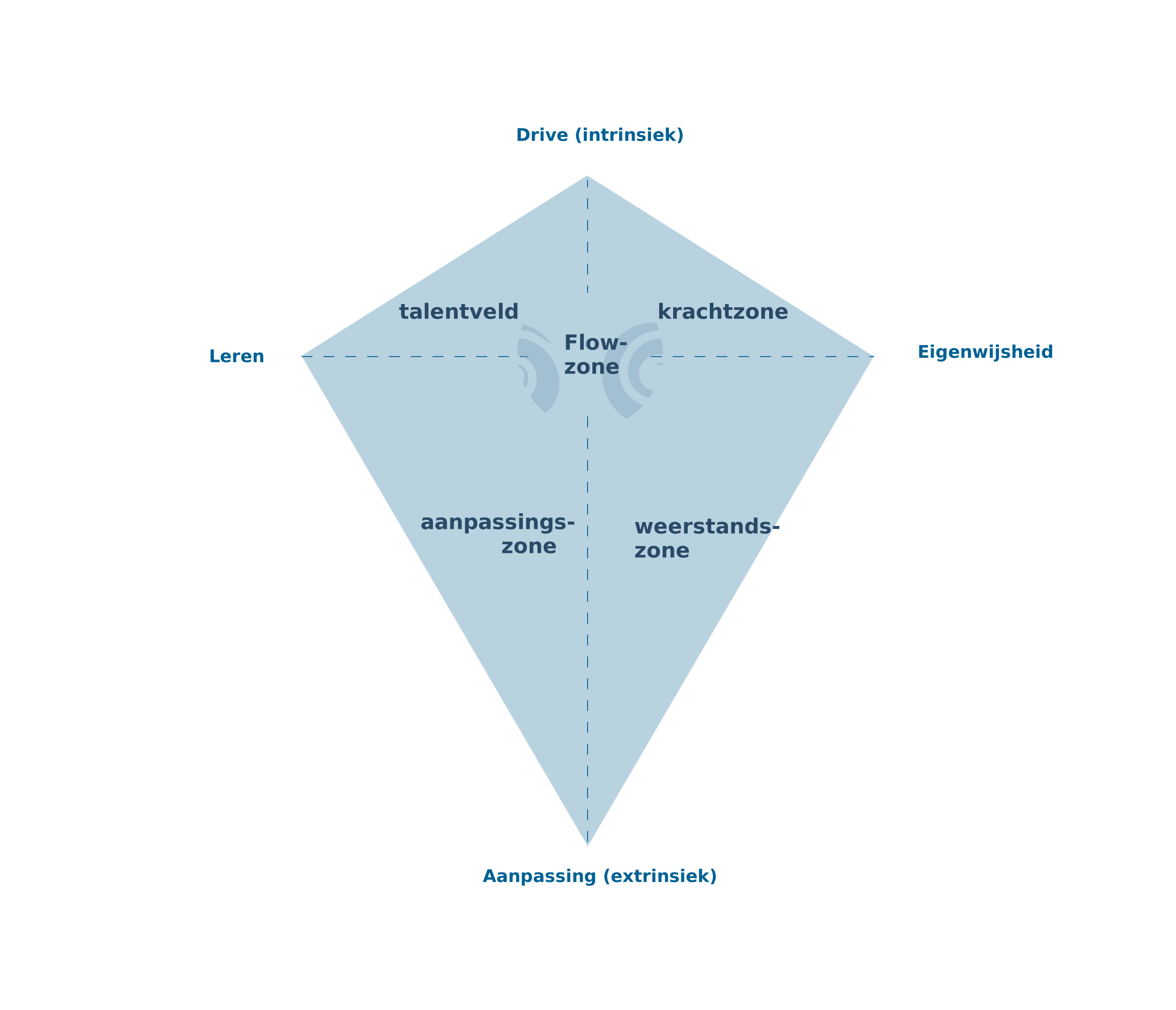
The five zones of the DEaLkite
Two axes give direction
The model is formed by two crossing axes that together determine your professional direction of movement. Where these axes cross, five recognisable zones emerge. Your position in the model is not static but moves with context, role and challenge.
Motivation axis (Drive ↔ Adaptation)
This axis shows how your motivation moves between what arises from within (intrinsic drive) and what is steered by external expectations (external adaptation). It provides insight into the source of your motivation in different situations.
Development axis (Experienced wisdom ↔ Learning)
This axis makes visible how you balance between relying on your experience and expertise (experienced wisdom) and the willingness to admit new insights (learning). It shows your openness to development versus holding on to proven patterns.
Zone 1 – Talent field
Where curiosity and motivation arise naturally
Characteristics:
- Intrinsic drive emerges by itself
- Learning is light and inspiring
- Fertile ground for growth toward Experienced wisdom
- You feel curiosity and flow
In practice:
Here, curiosity and motivation arise by themselves. You feel intrinsic drive, and learning is light and inspiring. This is the fertile ground for growth toward Experienced wisdom.
Zone 2 – Strength zone
Where you draw on experience, expertise and craftsmanship
Characteristics:
- You perform strongly with focus
- Sense of self-confidence: this is what I'm good at
- Driven by experience and expertise
- Craftsmanship comes to expression
In practice:
Here you draw on experience, expertise and craftsmanship. You perform strongly, have focus and feel self-confidence: this is what I'm good at.
Zone 3 – Resistance zone
Where working mainly costs energy
Characteristics:
- You master the work, but it no longer feeds you
- You are restrained from using your talent
- Zone of friction and energy loss
- Costs more than it delivers
In practice:
In this zone, working mainly costs energy. You master the work, but it no longer feeds you, or you are restrained from using your talent. This is the zone of friction and energy loss.
Zone 4 – Adaptation zone
Where behaviour is steered by external expectations
Characteristics:
- Learning because you have to, not out of curiosity
- Behaviour steered by external expectations
- Focus on adapting to the environment
- Less connection with your own motivation
In practice:
Here you show behaviour that is mainly steered by external expectations. You do learn, but not out of curiosity — rather because you have to.
Zone 5 – Flow zone (heart of the kite)
Where challenge and skill are in balance
Characteristics:
- Challenge and skill in balance
- Dynamic aim, not an end point
- You keep moving back to it
- Optimal state of performing and learning
In practice:
The place where challenge and skill are in balance. Flow is not an end point but a dynamic aim that you keep moving back to.
Why the DEaLkite is valuable
For individual development
The DEaLkite makes concretely visible in which zone your professional direction of movement sits. This helps in making conscious choices about roles, tasks and development paths.
For team composition
By placing team members' DEaLkites side by side, you can see where complementary strengths lie and where the team may have blind spots. This helps to deploy talent optimally.
For coaching and conversations
The DEaLkite makes development conversations concrete and visual. Instead of abstractly talking about 'improving', you see exactly which professional direction of movement needs attention and why. This makes goals SMART and achievable.
For culture and psychological safety
The DEaLkite helps teams to talk openly about professional directions of movement, without judgement. This creates understanding, appreciation and room for differences – essential for psychological safety.
Discover your DEaLkite
With the DEaLflow Analysis you get your personal DEaLkite, showing in which zones your professional directions of movement sit. Discover what this can mean for you and your organisation.