THE METHOD
Energy in motion
What a task asks for, how you look, which movement you make and what that asks of your energy. From there, you choose what you do.
Context
What does the task ask for?
Look
From which perspective do I look?
Move
Which movement does the task ask for?
Energy
What does that movement do to your energy?
Choose
What do I choose to do?
Look · KiteView
From which perspective do I look?
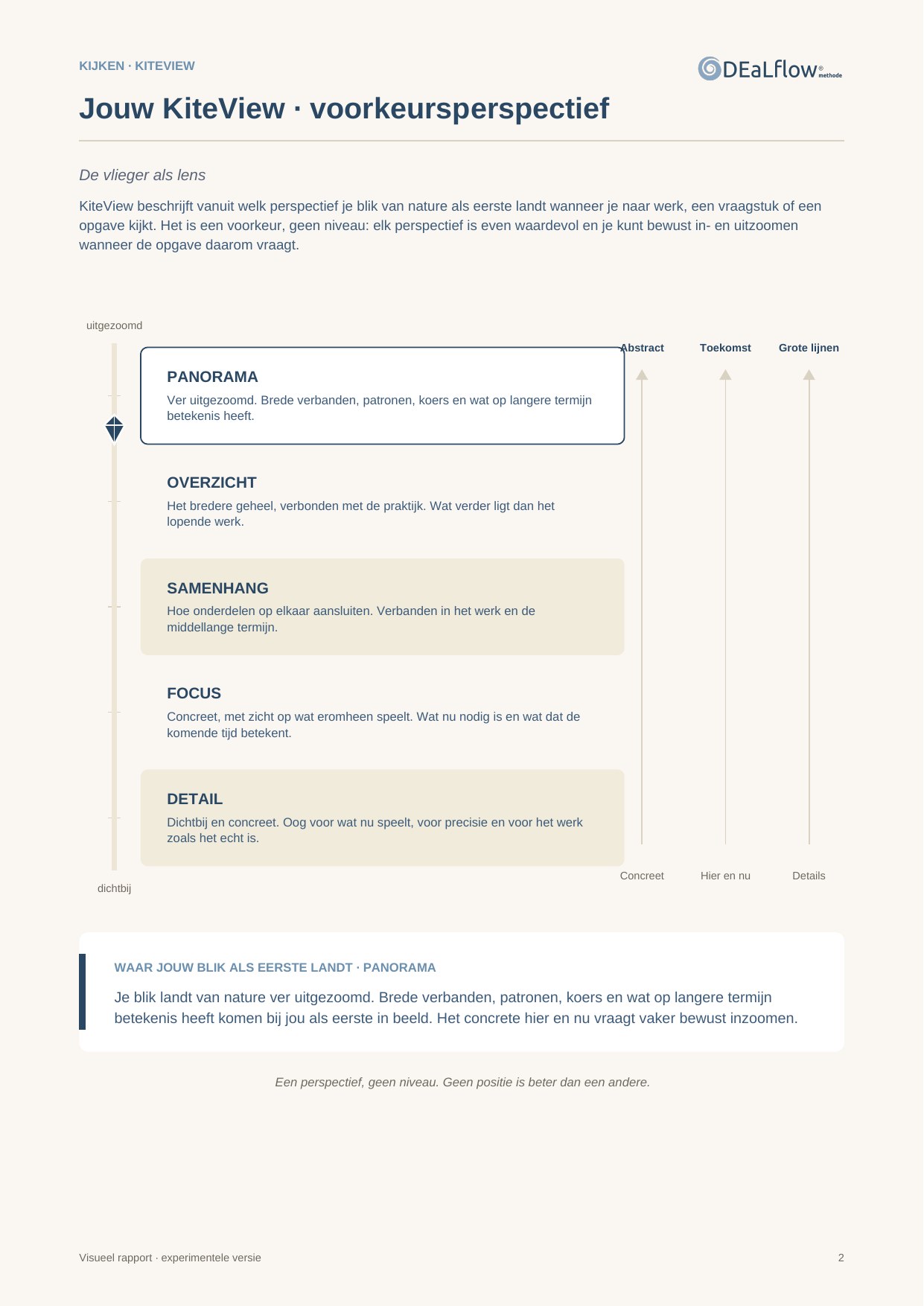
KiteView shows from which perspective you first look at a task.
Detail
Focus
Coherence
Overview
Panorama
ConcreteAbstract
Here and nowFuture
DetailsBig picture
- Detail
- Focus
- Coherence
- Overview
- Panorama
Five equal perspectives. A difference in perspective, not in level.
Move · Flows
Which movement does the task ask for?
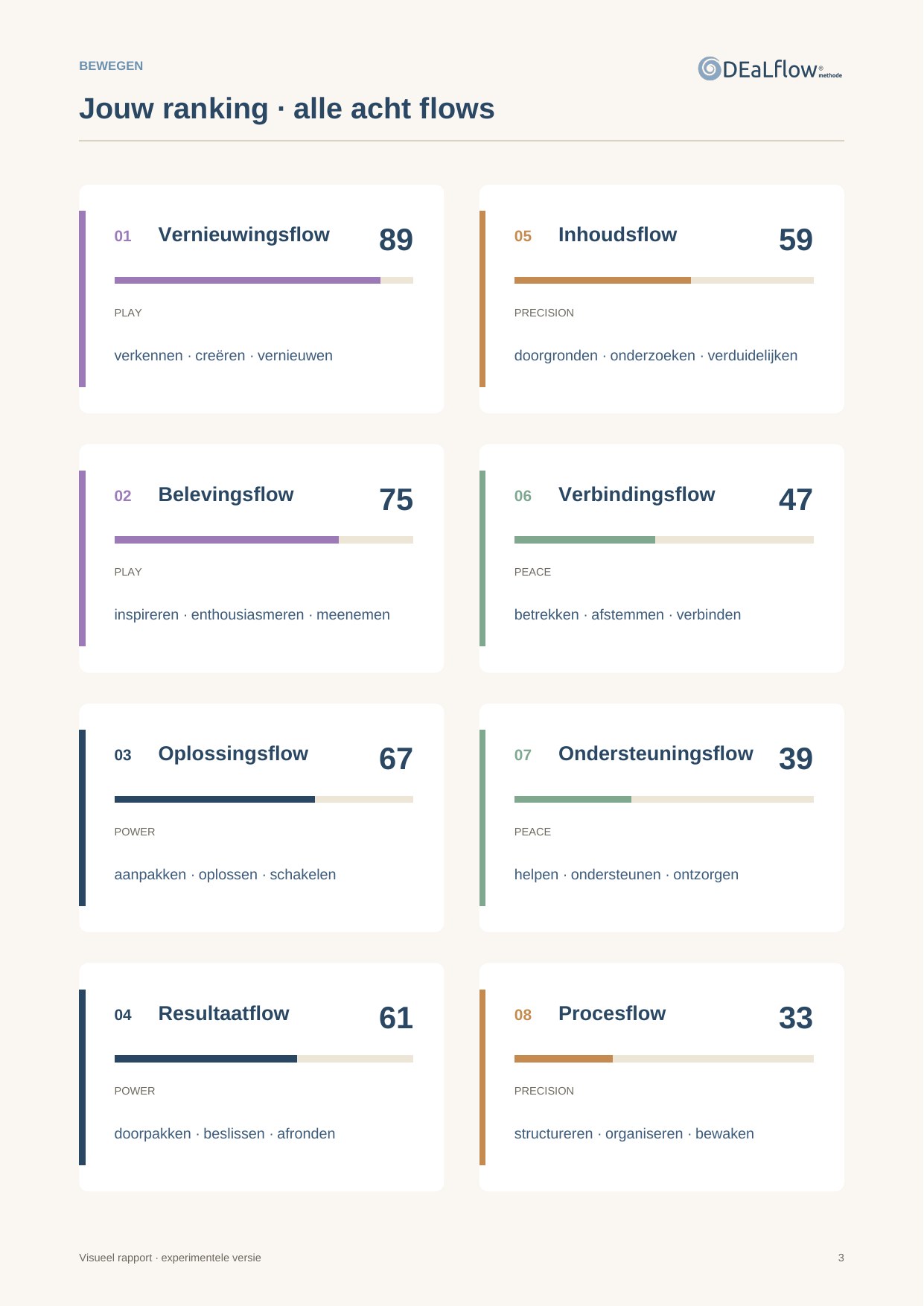
Four directions of movement, eight Flows. Every Flow becomes concrete through three core verbs: what do you do?
More about the 4 P's →Explore the 8 Flows →
Example
Direction
Play
Flow
Innovation flow
Verbs
three core verbs
Do
What do you actually do in this situation?
Energy
What does this movement do to your energy?
Context · What does the task ask for?
What you do relates to your energy.
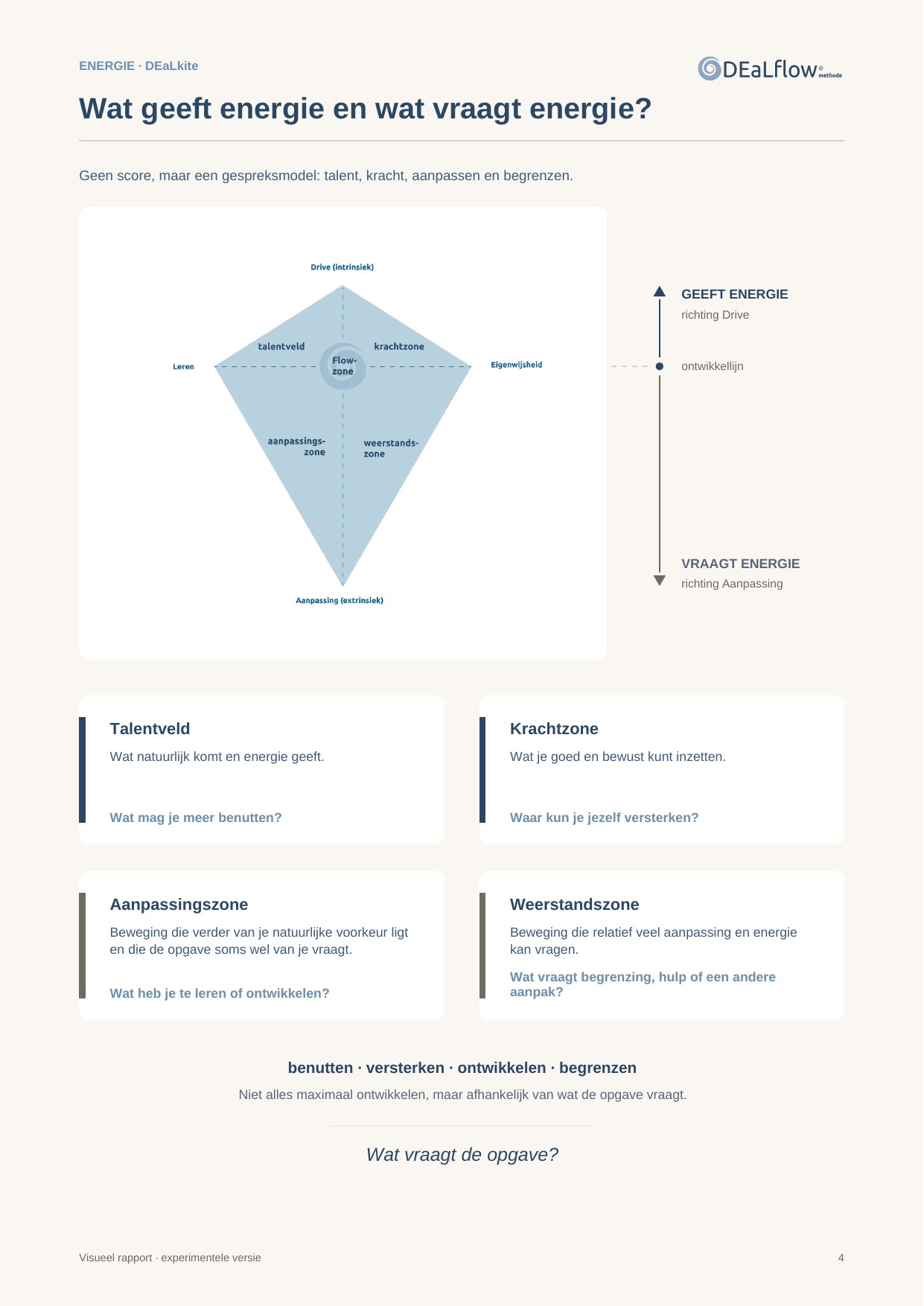
A movement can lie close to your natural preference or ask for more adaptation.
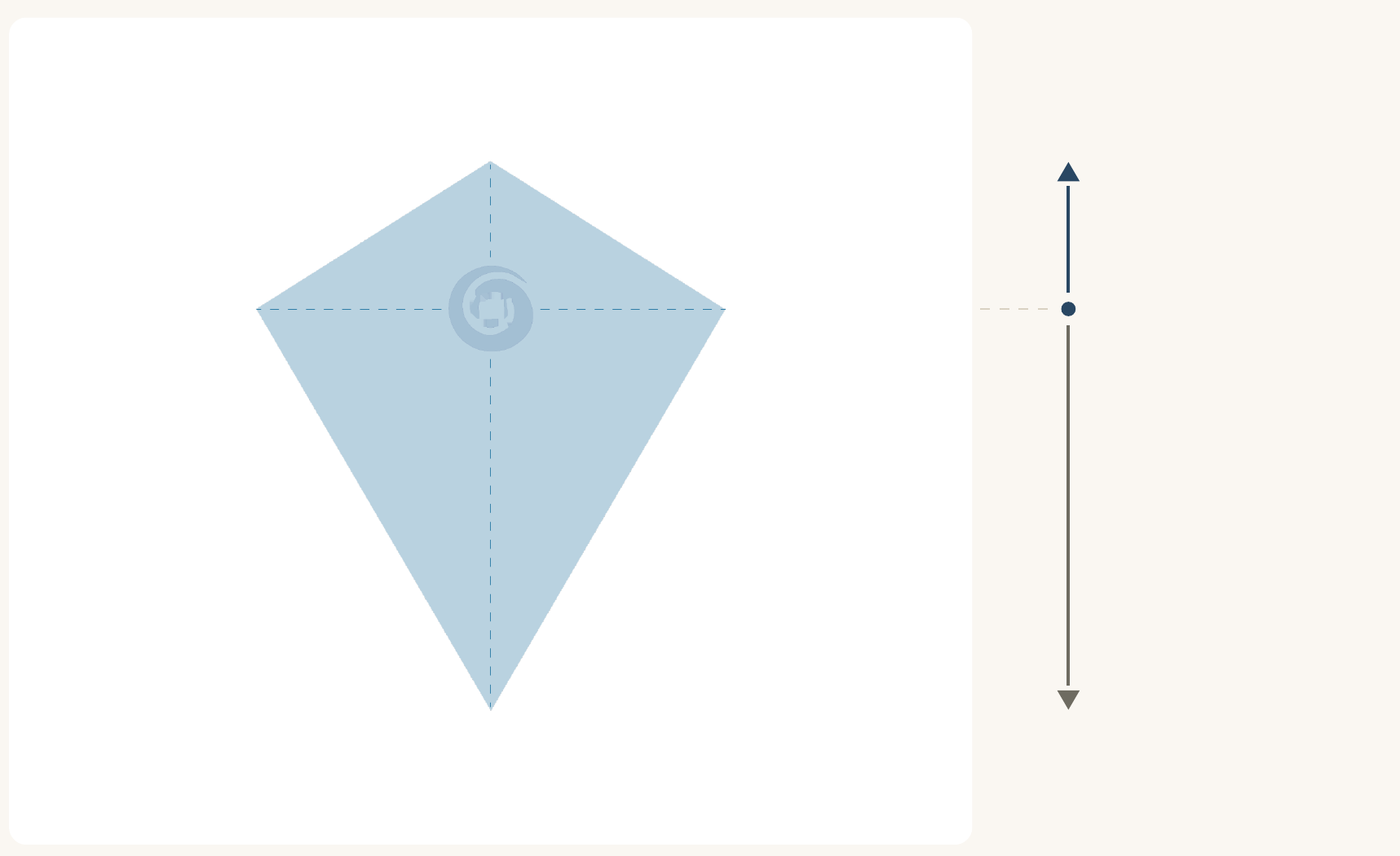
Energy · DEaLkite
What does that movement do to your energy?
DEaLkite shows how the movement relates to your natural preference.
Choose
What do I choose to do?
Not a profile or a label, but a conscious choice in behaviour.
DO MORE
DO LESS
DO DIFFERENTLY
↻ What does the task ask for now?
Applying it
For yourself
Personal development, reflection and coaching.
For professionals
Coaches, trainers, consultants and HR professionals work with the method.
This is how your analysis becomes visible
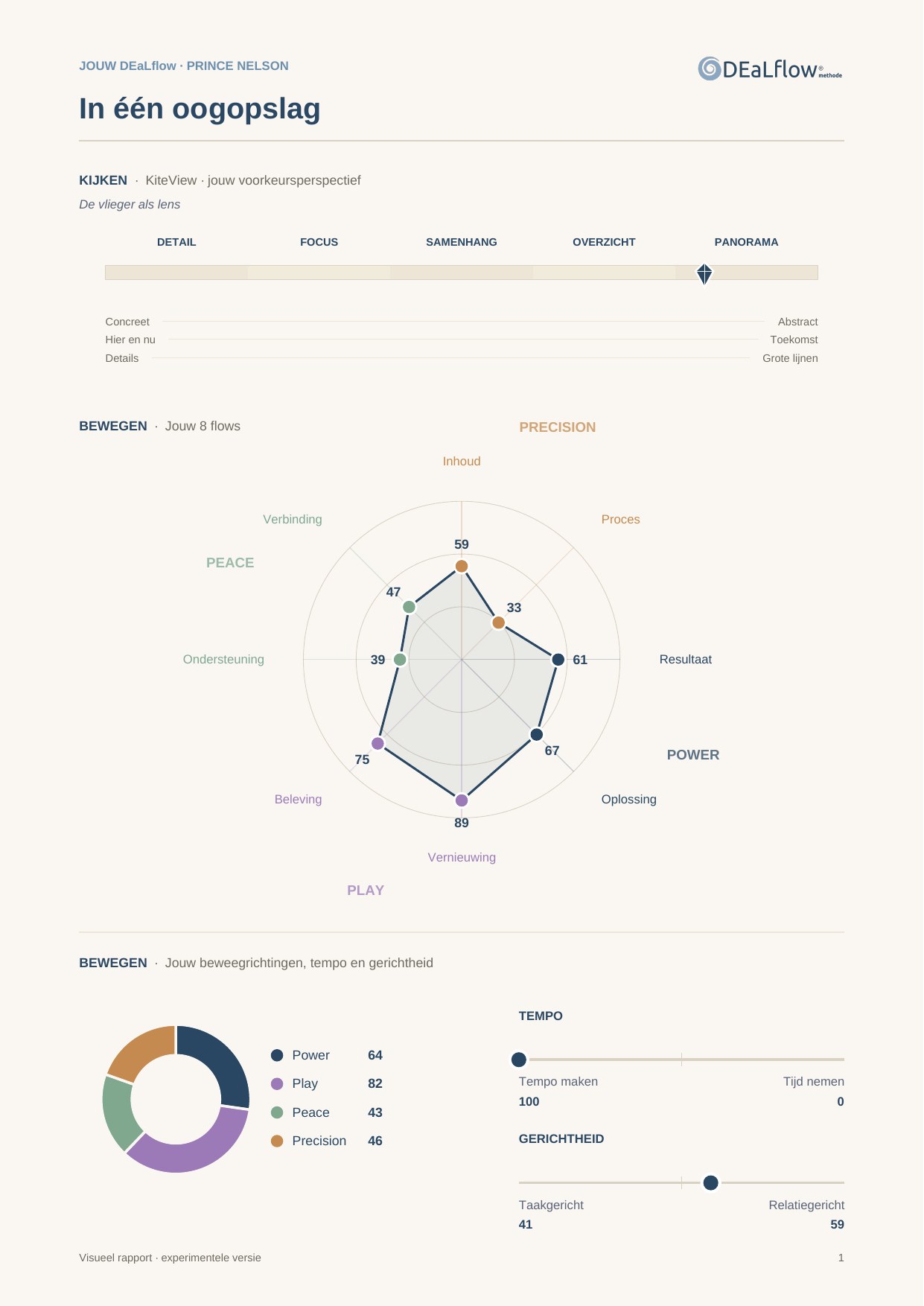
From preferred perspective and movement to energy. Brought together in a compact Visual report.
Example · Prince Nelson