Type the word dealflow into a search bar and you almost automatically land in the financial world. Investors and funds use the term to describe the stream of deals they evaluate, prioritise and either pursue or pass on.
Logical. But not complete.
Because the same dynamic plays out every day in teams, projects and organisations.
DEaLflow is about movement
In finance, dealflow makes one thing visible: movement.
Too little dealflow means standstill. Too much dealflow means noise. Good dealflow means focus and progress.
That principle is not exclusively financial. It is universal.
Behaviour has DEaLflow too
In organisations there is a constant stream of:
In HR and organisational development we often talk about resistance, buy-in or culture. But under those words there is often something simpler.
The flow of behaviour and motivation no longer works.
Why this perspective helps
The word dealflow forces a different conversation.
Not:
But:
That makes dealflow a useful behavioural lens for collaboration, development and behavioural leadership.
From labels to movement
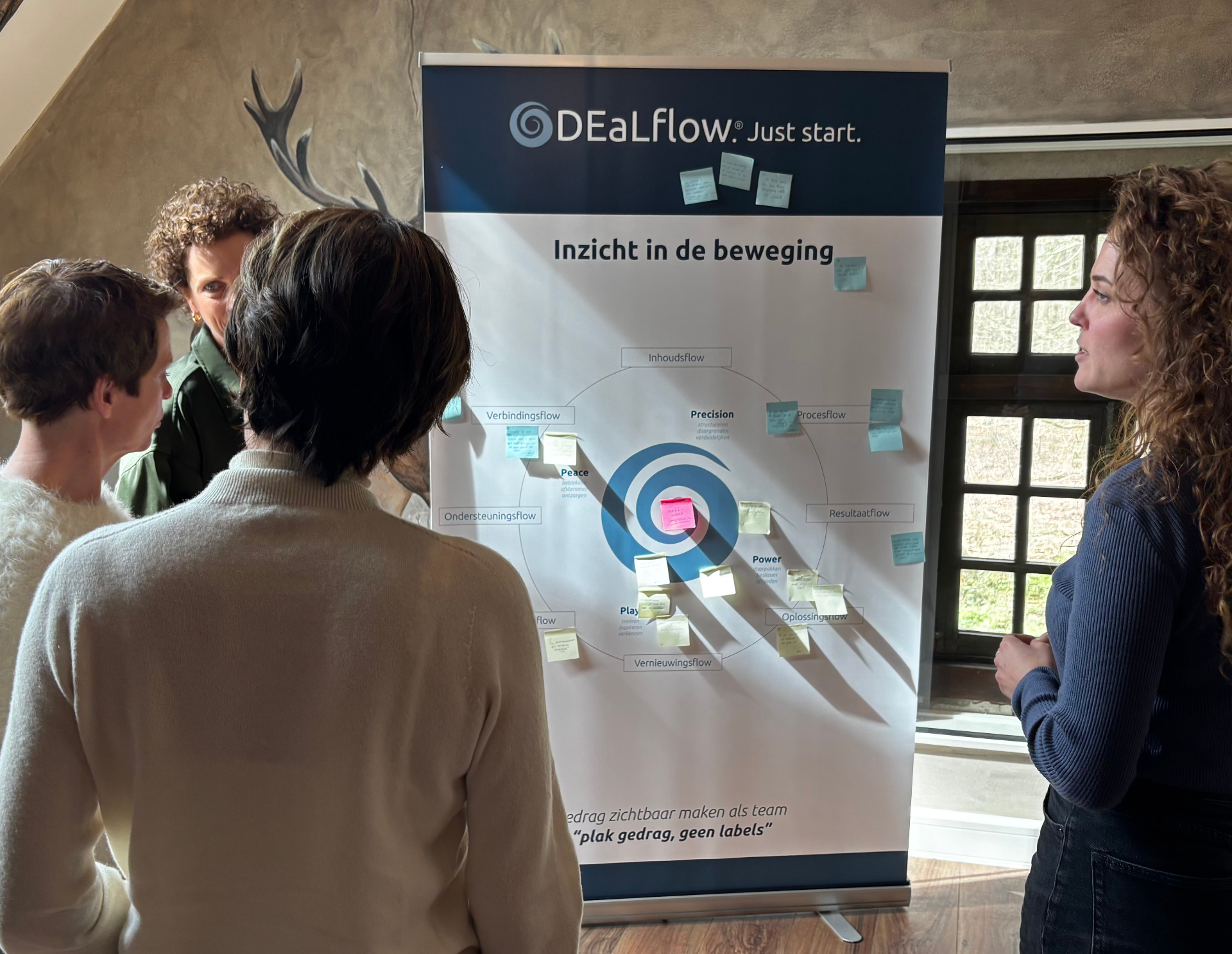
Within the DEaLflow Method, dealflow is used as a way to analyse behaviour and motivation in context.
Not as a profile. Not as a label. But as a DEaLflow analysis: what is moving, what is blocking and what calls for adaptation or learning.
Where many behavioural assessments work with fixed typologies, such as DISC, DEaLflow looks at movement and dynamics.
The conversation shifts from who someone is to what is happening.
Two meanings, one principle
Dealflow belongs in finance. That meaning remains.
But the word describes something bigger than investing alone. It describes how systems deal with opportunities, choices and progress.
Finance is one domain. Behaviour and collaboration another.
The same flow. A different application.
On this site we deliberately use DEaLflow in that second meaning.